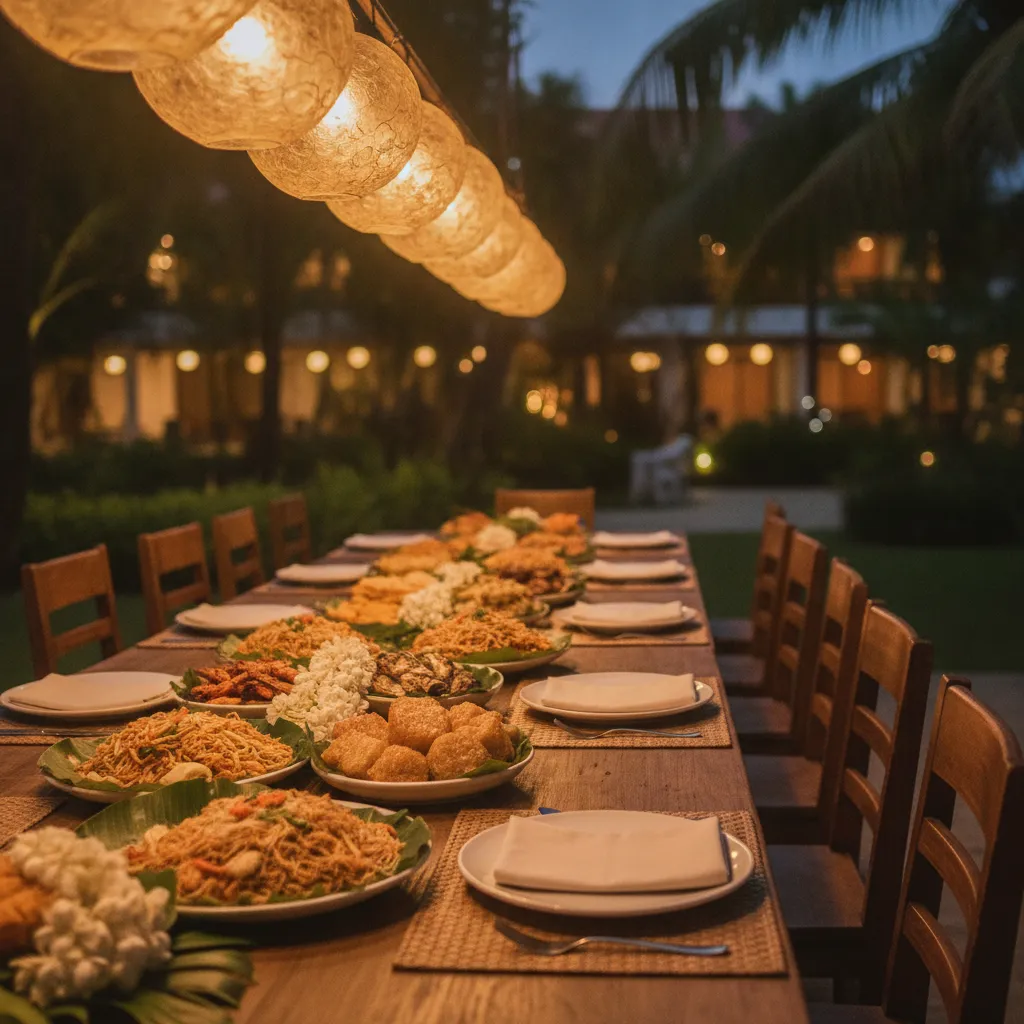
Wedding Welcome Dinner in the Philippines: A Guide
A wedding welcome dinner in the Philippines is a relaxed meal, usually held the evening before the wedding, for guests who traveled to attend: relatives flying in from abroad, provincial family, and close friends staying overnight. Keep it short (two to three hours), keep it casual, host it near where guests are staying, and serve food that feels like home. It is not a second reception. It is the moment your two families meet each other before the big day.
If you have ever watched a tita arrive from the airport tired and hungry with nowhere to go until tomorrow's ceremony, you already know why this dinner earns its place. This guide covers who to invite, who pays, how it differs from a rehearsal dinner, what to serve, and a simple timeline.
Welcome Dinner vs Rehearsal Dinner vs Post-Wedding Brunch
These three gatherings get mixed up, and mixing them up is how guest lists balloon. Here is how they differ.
| Gathering | Who it is for | Typical timing | Typical host |
|---|---|---|---|
| Welcome dinner | Out-of-town guests and both families | The evening before, or the night guests arrive | The couple, or the couple's parents |
| Rehearsal dinner | Wedding party, sponsors, officiant, close family | After the ceremony rehearsal, 1 to 7 days before | The couple or their coordinator |
| Post-wedding brunch | Guests still in town and immediate family | The morning after | Parents, relatives, or the couple |
The rehearsal dinner is described this way by Bride and Breakfast: a meal after the ceremony rehearsal for the wedding party, officiant, and close family. A welcome dinner is wider. It also covers the guests who are not in the entourage but flew or drove a long way.
Many couples combine the two into one evening. That works when your wedding party is small and most of them are also your out-of-town guests. If you have a long entourage, a separate and smaller rehearsal meal is often easier to run.
Who Should Be Invited
A simple rule: invite people who traveled, plus the people who hold the event together.
A workable guest list for the welcome dinner:
- Both sets of parents and immediate siblings
- Out-of-town and overseas relatives staying in a hotel or with family
- Principal sponsors (ninong and ninang) who are traveling in
- Your wedding party, if you are combining with the rehearsal
- Close friends who flew in, such as a balikbayan barkada
Leave out local guests who can simply see you tomorrow. This keeps the dinner small, and it keeps the cost sensible. If you are still deciding how big the whole wedding should be, our guide to the wedding guest list limit in the Philippines helps you set a number before you add a second event on top of it.
A tip for avoiding hurt feelings: tell invited guests the dinner is "for those who traveled," so locals understand it as a logistics gathering and not a snub.
Who Hosts and Who Pays
Filipino families have strong views on this, so settle it early and kindly. There is no single rule, and customs vary by family and region.
Common patterns:
- The couple hosts and covers it from the wedding budget.
- One set of parents hosts, often the family whose home province the wedding is in, as an extension of the welcome they already give guests.
- Both families split it, which matches how many couples already share wedding costs.
- Relatives pitch in with food, a classic Filipino approach (more on that below).
The groom's family traditionally leads the pamamanhikan, and the visit usually ends with a feast hosted at the bride's home, according to Wikipedia's overview of Philippine marriage customs. A welcome dinner can echo that feast, with the second family taking a turn as host. For the full background, see our pamamanhikan guide.
Whatever you choose, put the welcome dinner as its own line in your wedding budget so it does not quietly eat into the reception. Costs for a simple home-style meal and a hotel restaurant private room can differ widely, and prices vary by city, caterer, and season, so ask for quotes before you commit.
Choosing a Format That Fits Your Family
There is no wrong format. Pick the one that matches your crowd and your energy.
| Format | Works best when | Watch out for |
|---|---|---|
| Family-style dinner at a restaurant private room | 20 to 50 guests, hotel nearby | Minimum spend or set-menu rules; confirm in writing |
| Home dinner at a family house | A provincial wedding with a big family home | Parking, seating, and who cleans up |
| Boodle fight or kamayan table | A casual, barkada-heavy group | Clear hand-washing setup, food allergies |
| Hotel or resort garden dinner | Wedding at the same property as the guest rooms | Evening weather, especially in rainy months |
| Potluck with a coordinator | Tight budget, big and generous family | Too many dishes of the same kind |
Venue choice matters more than people expect. Putting the dinner inside or beside the hotel guests are booked in saves everyone a trip, and it connects with the traffic planning in our wedding transport and traffic plan.
What to Serve
Serve food your visitors miss. Overseas relatives especially often ask for the dishes they cannot find abroad, so this is the night for regional comfort food rather than a plated international menu.
Ideas that fit most welcome dinners:
- Pancit, often associated with long life and a familiar dish at Filipino gatherings
- Grilled seafood or inihaw if the venue is by the coast
- Regional specialties from where your family is from: Bicol express, kare-kare, sinigang, or Ilocano dishes
- Sweet endings such as leche flan, halo-halo bar, or bibingka for a cozy feel
- A kid-friendly corner, because Filipino weddings usually bring the whole family
Save the spotlight dish for the next day. If you are planning a lechon at the reception, our lechon wedding guide will help you pick the right size and timing so you do not duplicate it at dinner. For caterer questions that apply to both events, see how to choose a wedding caterer.