Filipino Wedding Food Station Ideas
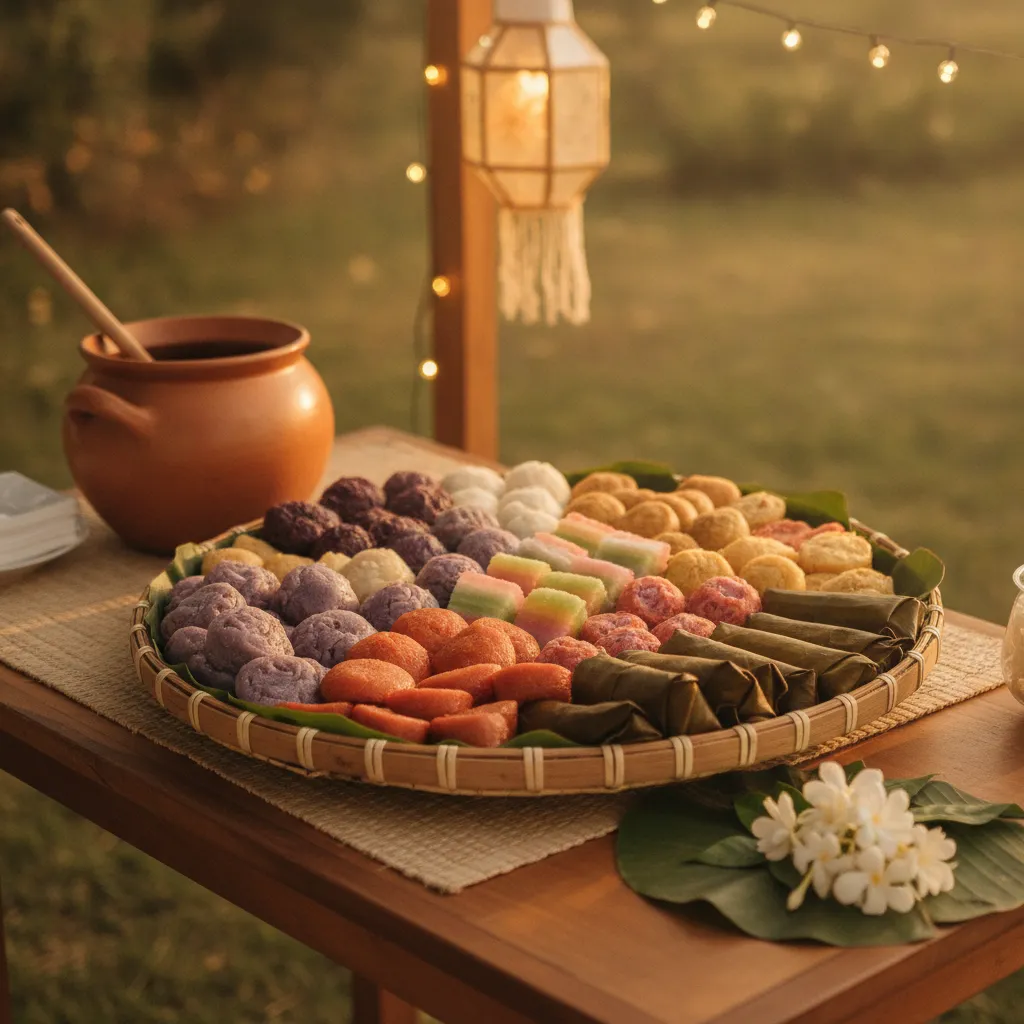
The best Filipino wedding food stations are the ones that feel like home and keep guests out of their seats: a taho cart, a kakanin and merienda spread, a lechon carving station, or a nostalgic sari-sari store corner. Stations work when the food is familiar, survives a warm reception hall, and fits the share of your catering budget you set aside for them. Think of them less as decor and more as an experience your guests will actually remember, and post.
Food is the part of a Filipino wedding guests judge most, and stations are having a real moment, especially the nostalgic Pinoy setups filling feeds right now. This guide covers the station types that work, the nostalgia trend driving them, rough costs and logistics, and how to fit stations into your reception without clogging the night.
Why Food Stations Work at a Filipino Wedding
A seated meal feeds people. A station gives them something to do, somewhere to gather, and a reason to talk. At a Filipino wedding, where the food is the hospitality, a well-chosen station lands as generosity, not gimmick.
Stations also solve a real problem. If your reception is long, or if you want guests mingling rather than glued to tables until the program ends, a station keeps the room moving. The trade is cost and logistics, so pick a couple that fit your wedding rather than lining the hall with every idea you have seen.
Decide in order: your overall catering first, then one or two stations as the accent. Our guide to catering quotes, deposits, and balances covers how to pin down what is included before you add anything on top.
The Nostalgic Pinoy Stations Everyone Is Doing
The strongest trend right now is nostalgia: setups that feel like childhood, merienda, and the neighborhood. They photograph beautifully and they hit guests in the heart.
| Station |
Why it lands |
Watch for |
| Taho cart |
Warm, familiar, a crowd-pleaser across ages |
Timing and holding temperature |
| Sari-sari store corner |
Pure nostalgia, a photo magnet |
Curate the snacks, keep it tidy |
| Tiangge favor corner |
Guests "shop" their own giveaway |
Overlaps your favors budget |
| Merienda spread (kakanin) |
Puto, bibingka, suman, sapin-sapin, all local |
Freshness, serve near the right hour |
| Street-food cart (isaw, fish ball, kwek-kwek) |
Fun, casual, a reception icebreaker |
Oil, smell, and ventilation indoors |
The tiangge-style favor corner is a clever crossover: instead of a boxed giveaway on every seat, guests pick their own from a curated spread. It doubles as entertainment and a souvenir, so plan it alongside your wedding giveaways rather than on top of them, so you are not paying twice.
The Classic Stations That Still Deliver
Nostalgia is the trend, but the classics earn their place for a reason.
- Lechon carving station. The centerpiece of many Filipino receptions. A live carving station is theater and a meal at once. Pick the size and timing with our lechon wedding guide so it is not sitting out too long.
- Halo-halo or ice cream (sorbetes) cart. A dessert station that suits the heat and the mood, especially for an afternoon or garden wedding.
- Coffee and kapeng barako bar. Low-effort, high-appreciation, and it keeps guests warm into the evening.
- Grazing or Filipino cheese-and-spread table. A modern option that works for cocktail hour before the program.
None of these is automatically better than another. The right station is the one that fits your crowd, your venue, and the hour you will serve it.
What Stations Cost, Roughly
Stations are priced by the caterer or the specialty vendor, usually by headcount, by the hour, or as a flat station fee, plus the staff to run them. Because it depends so much on the station type and your guest count, treat any figure as an estimated range, not a quote.
A simple cart like coffee or taho sits at the affordable end. A live lechon carving station or a built-out sari-sari setup with styling costs more. The levers that move the price:
- Headcount and consumption. More guests, more food, more staff.
- Specialty vendor vs your caterer. A dedicated taho or sorbetes vendor is a separate line from your main catering.
- Styling and props. The sari-sari and tiangge looks cost more because the setup is the point.
- Staffing. Someone has to run, refill, and clean each station.
Set a ceiling on purpose, get it itemized, and slot it into your wedding budget, where every range is hedged rather than fixed. All prices vary by vendor, region, and season.
Fit Stations Into Your Reception Flow
A station in the wrong slot is a station nobody visits, or one that competes with your program.
- Cocktail hour or before the program is ideal for a grazing table, a coffee bar, or street food, keeping guests happy while you take photos.
- During open dancing and the back half suits a taho cart, halo-halo, or the sari-sari corner, when people are up and roaming.
- Avoid stealing the meal's thunder. If you have a full plated or buffet dinner, keep stations light so guests are not too full to enjoy either.
- Tell your coordinator and emcee when each station opens so it is announced and fits the run of show. Our guide to the Filipino reception program flow shows where these moments land.
A practical note from real receptions: a fun station late in the night is one of the simplest ways to keep guests from leaving right after dinner.
Match the Station to Your Region and Story
The stations that feel most personal are the ones tied to where you and your food are from. A Batangas wedding with a kapeng barako bar feels natural. A merienda spread built around a lola's recipe is worth more than any imported idea. If your family is from a particular province, a specialty from there is a quiet, generous touch that guests notice.
Pairing the station to your story keeps it honest and keeps it yours, the same principle that makes a locally sourced giveaway land better than a generic one.
Frequently Asked Questions
What food stations are popular at Filipino weddings?
Nostalgic setups are trending: taho carts, sari-sari store corners, tiangge favor spreads, and kakanin or merienda tables. Classics like lechon carving, halo-halo carts, and coffee bars remain popular. Choose one or two that fit your crowd and venue.
How much do wedding food stations cost in the Philippines?
It varies by station type, guest count, and whether it is your caterer or a specialty vendor. A simple cart is affordable; a live lechon station or a styled sari-sari setup costs more. Treat any figure as an estimated range and get an itemized quote.
Do food stations replace the main meal?
Usually no. Most couples keep a plated or buffet dinner and add one or two stations as an accent. If you build the whole reception around stations, make sure the total food still fills your guests.
What is a tiangge or sari-sari wedding station?
A nostalgic corner styled like a neighborhood store or market stall. Guests browse snacks or pick their own favor to take home, so it often doubles as your giveaway. It is a strong photo and nostalgia moment.
When should stations open during the reception?
Light stations suit cocktail hour before the program; roaming stations like taho or halo-halo suit the back half during open dancing. Brief your coordinator and emcee so each opening fits the run of show.
Serve the Food That Feels Like You
Stations work when they taste like home and fit the night, not when they chase every trend at once. Pick one or two that mean something to you, place them where guests will actually visit, and let the food do what Filipino hospitality always does.
Storia helps Filipino couples settle the feel of their wedding first, which makes every later choice, down to the food stations, easier to brief.
Discover your Wedding DNA. Free, no signup needed. Take the quiz
Sources: Bride and Breakfast, reception and catering features, Manila Times, wedding ideas from the Philippine Wedding Summit. All peso figures are estimated ranges for 2026 and vary by vendor, guest count, region, and season. Confirm inclusions, staffing, and food-safety handling directly with your caterer or station vendor.
Plan your wedding with clarity
Discover your Wedding DNA in 5 minutes. Free, no signup needed.
Take the Free Quiz